
Stepping out of the van onto the Leavey Ranch, I was reminded of last fall, when our dendrology class would drive to a new landscape in Connecticut and spend four hours learning to identify its characteristic tree and shrub species. In the Northeast, I sometimes miss that feeling of novelty – a credit to how much we have learned in a short time at The Forest School – but it returned in full at Blue Lake, CA, as I looked up at new trees and down at new grasses.
It was early October, the second day of our Wildfire, Forest Resilience, and Cultural Burning Experiential Field Trip, and my first encounter with the ecology of Northern California. Following our day at the North Coast Regional meeting of the California Wildfire & Forest Resilience Task Force, we were out in the field to learn how the Blue Lake Rancheria is stewarding and restoring a former dairy pasture near the Mad River. Riparian zones host many culturally significant species for the tribes of Northern California, and we had the privilege to see and learn how people use these plants.
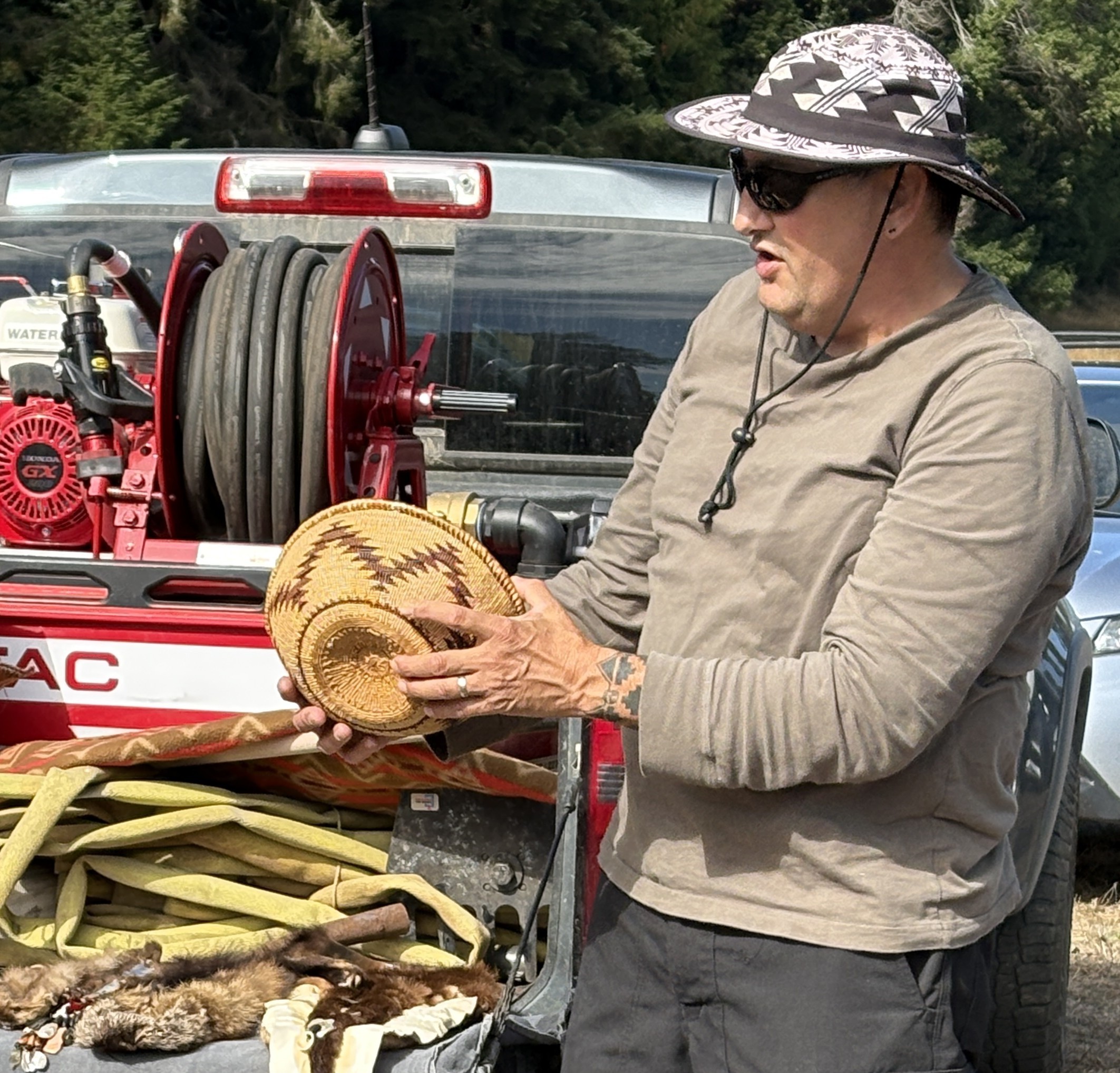
With a notebook in one hand and iNaturalist in the other, I began getting to know our surroundings. Meanwhile, the depth of knowledge our hosts shared was a constant reminder of how much can only be learned from thousands of years of observation and stewardship. Underneath a massive tanoak (Notholithocarpus densiflorus), we learned how burning after the early, buggy acorn crop falls can interrupt the acorn weevil’s lifecycle and clear the ground for gathering the healthy crop that follows. Every member of the forest, I realized, receives this careful, individualized treatment: from the many huckleberry species (Vaccinium) to the fragrant pepperwood (Umbellularia californica).
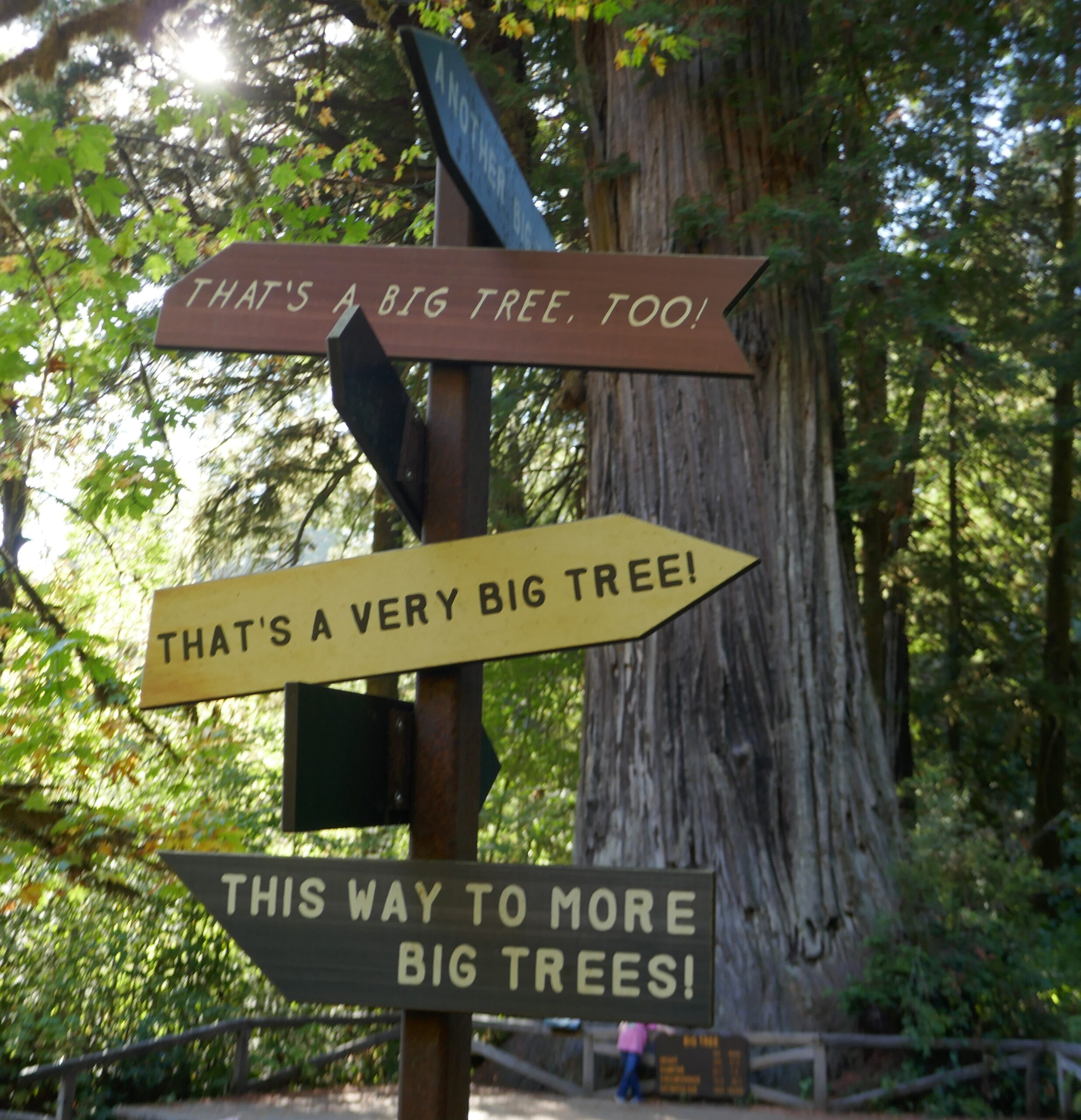
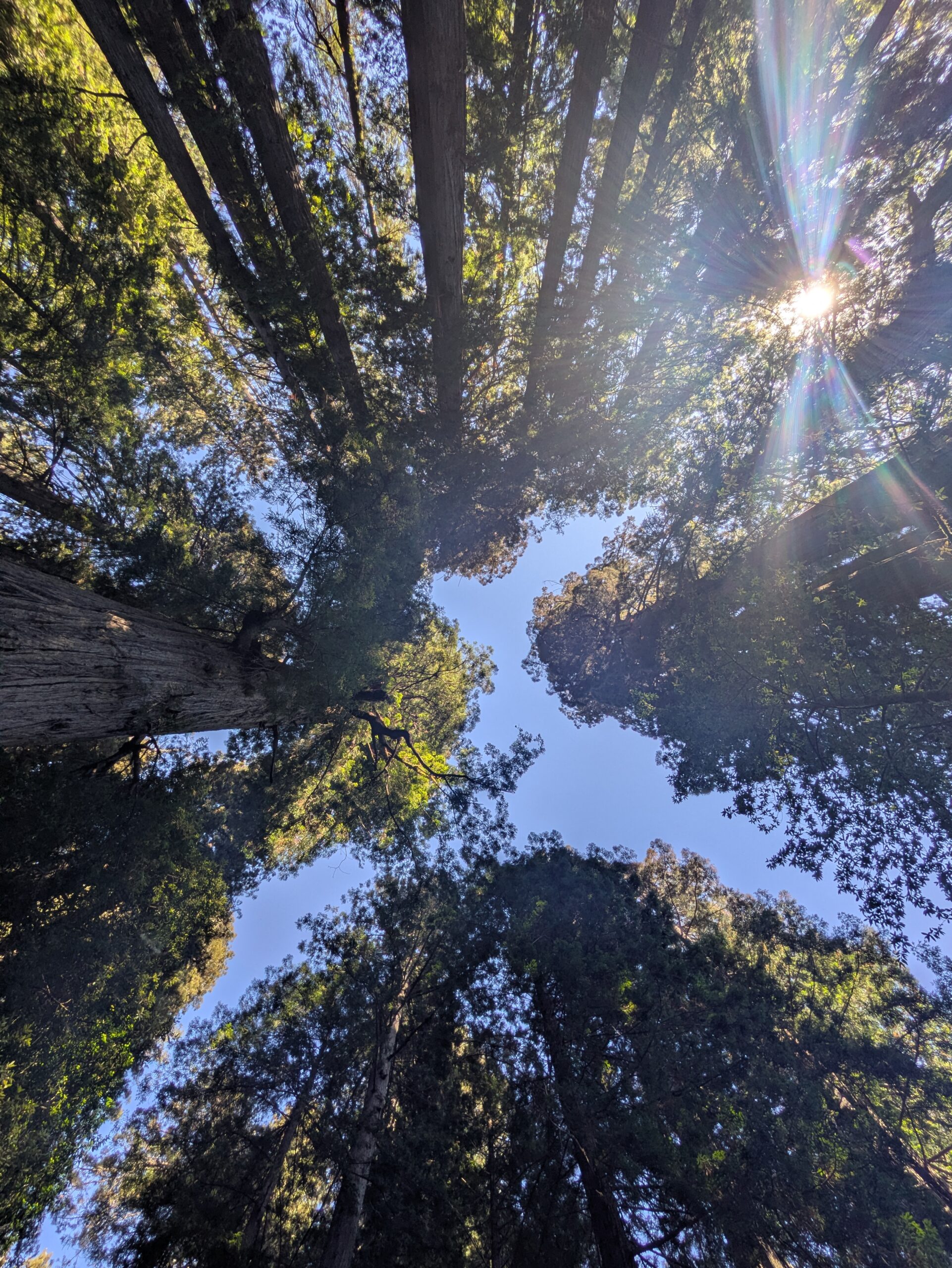
Botanizing had to be put on hold at the Prairie Creek Redwoods State Park the next day: there were simply too many big trees to admire. Coastal redwoods (Sequoia sempervirens) are so tall that the upper branches supplement their dwindling water supply from the roots by wicking moisture directly out of the coastal fog. But even on this sunny afternoon, only the lower portions of the crown were visible on the tallest trees.
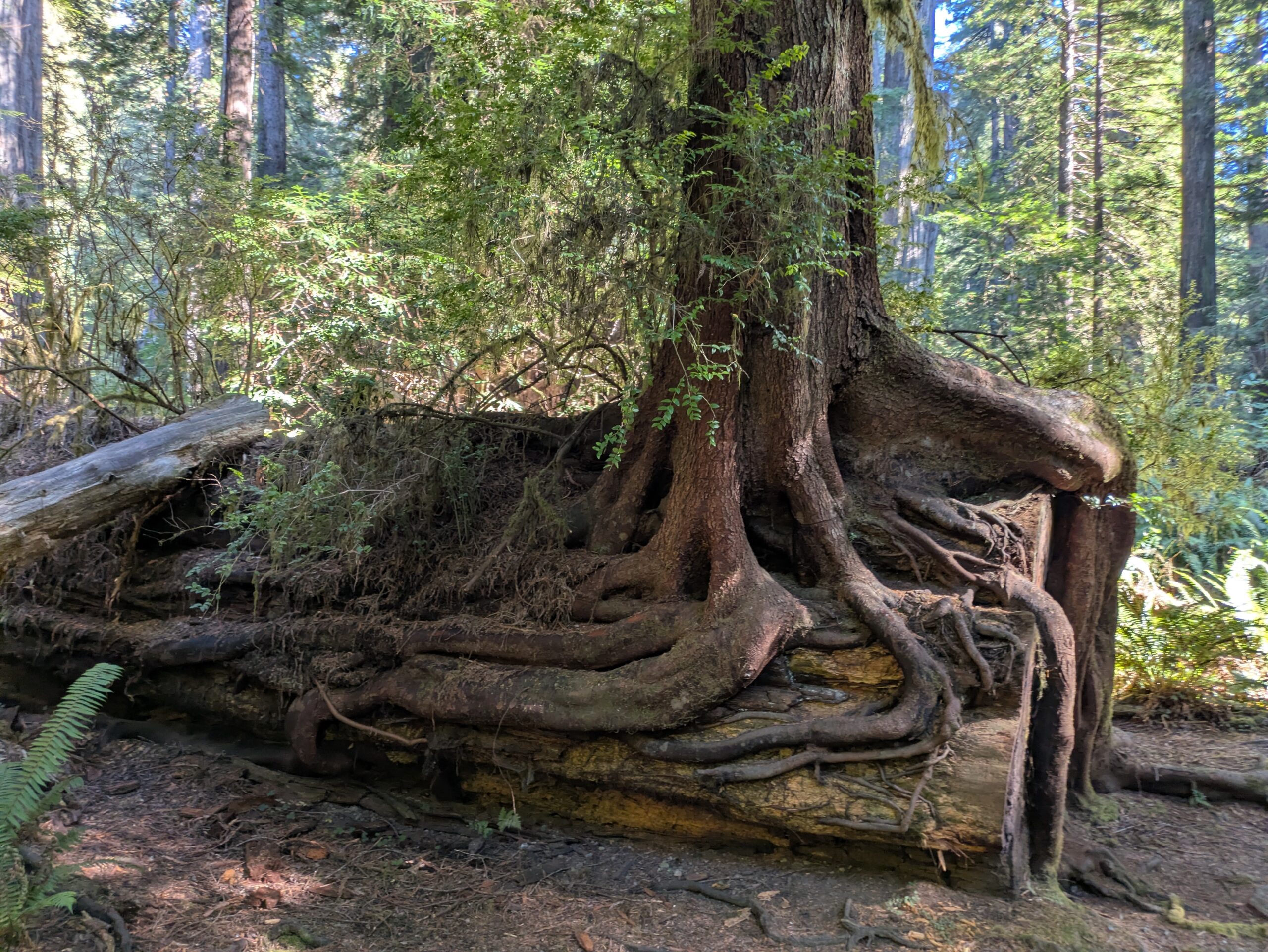
Our view down on the forest floor was just as spectacular, where fallen redwoods serve as “nurse logs” for the next generation of trees to germinate and grow.
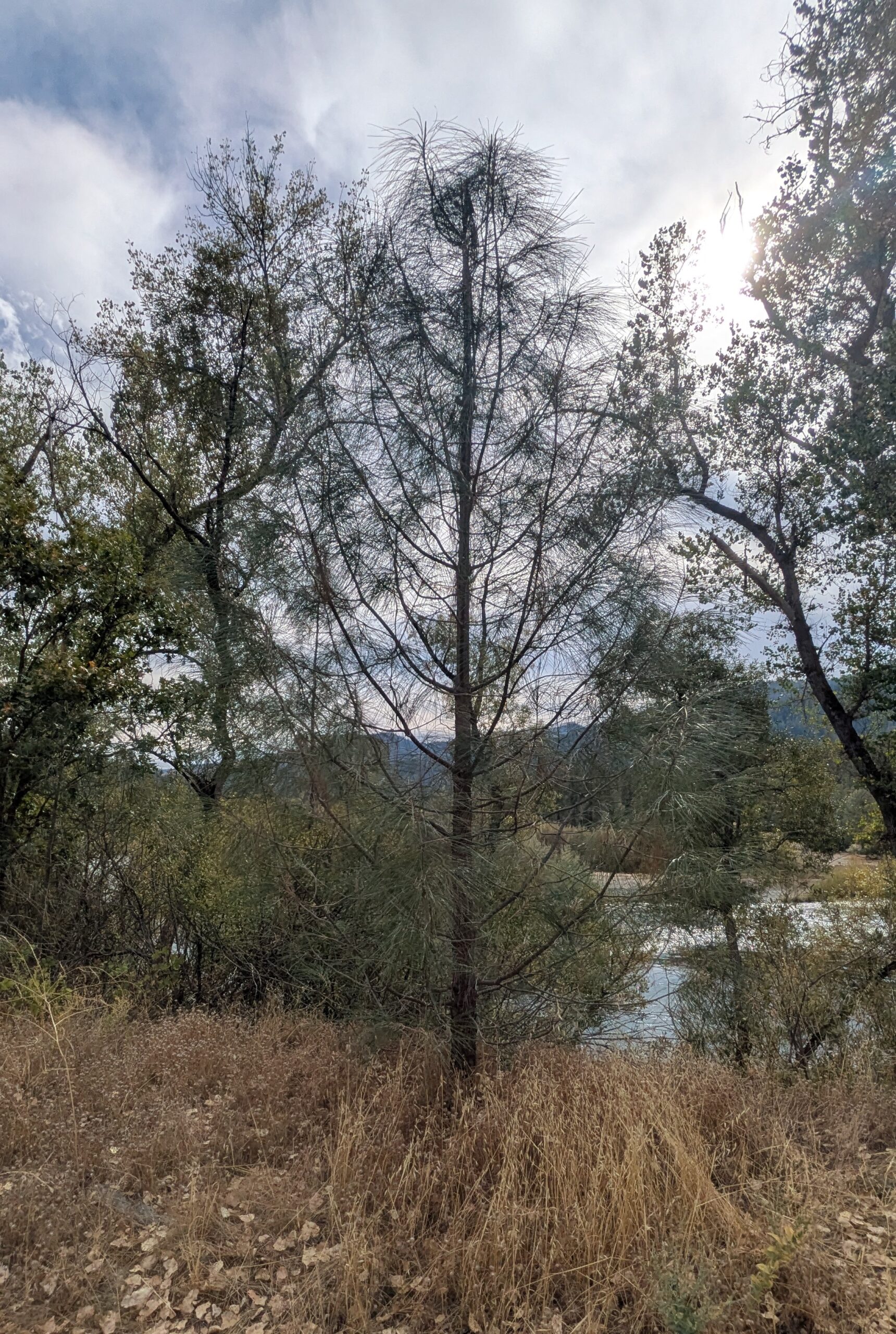
My break from the field guide was a brief one: to reach our final destination in Chico, the group crossed the Klamath Mountains and the Central Valley, stopping along the road multiple times to take in the new scenery. Redwoods and hemlocks gave way to pines, canyon live oak (Quercus chrysolepis), and incense cedar (Calocedrus decurrens). My favorite was the ghost pine (Pinus sabiniana), with its long, wispy needles giving the mountainsides a blue-gray haze.
On our last field day with Dr. Don Hankins, a familiar face appeared as we descended into a valley wetland: milkweed. California tribes have long used fire to encourage this native and culturally significant plant, which is also an important food source for monarch butterflies. In this valley, where wildfire and cultural fire alike have patterned the landscape in recent years, a patch stood above the grass, dispersing silk and seeds on the wind ahead of the rainy season.
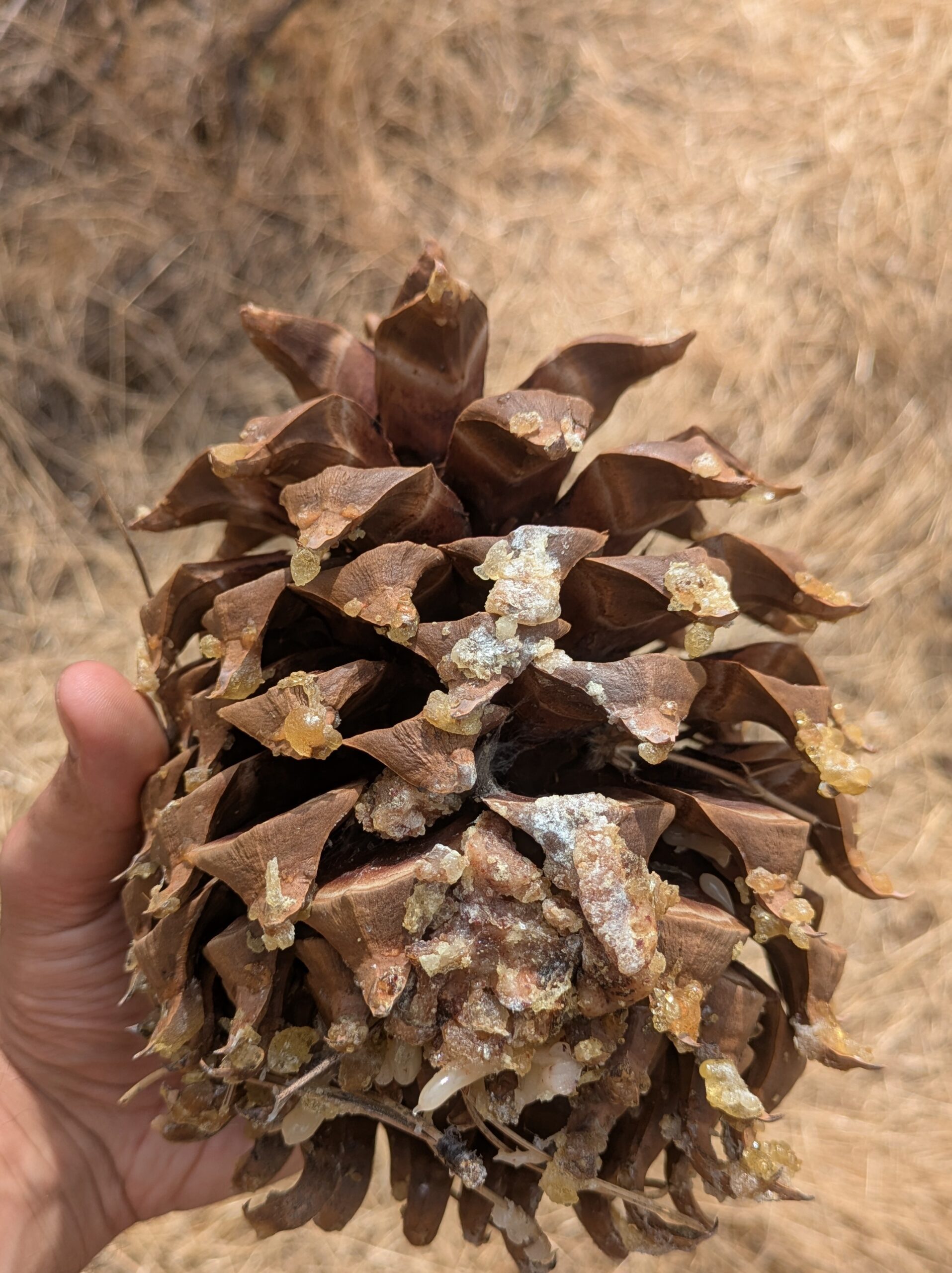
Back on the East Coast, with no coastal redwoods or giant pinecones, I’ve found myself thinking just as much about the milkweed and maidenhair fern, species with close relatives in New England. Being able to identify a species and knowing its habitat, preferences, and reproduction are just the first steps, not the end of the novelty. There is so much still for us to learn, particularly from those who have stewarded these lands for thousands of years.
Avraham Penso – Avraham is a second-year student in the Master of Forestry program. He is interested in all things botany, as well as geospatial applications for forest and watershed management.
Catch up with Avraham on LinkedIn!