I never wanted to be a lawyer. It’s true. To me, the best
lawyers typically don’t want to be lawyers. They want to effectuate some
sort of change, see the law as a tool to do so, and if you’re like me, find
yourself in Torts, tapping your Chaco on the ground, looking out the window and
hoping the sun doesn’t set before you can race up the local hiking trail.
Eventually (also like me), you might catch the bug and decide lawyering is not
just a, but the most important tool in change-making. You’d also be willing
to argue that point. C’est la vie.
I learned that the hard way this year, when, after my first two
years of law school at Vermont Law, I began the first year of my Master of
Environmental Management degree at Yale School of the Environment. As a JD/MEM
dual-degree student, I spent the past two years lawyer-ing. Beginning the one
and a half I will spend science-ing was kind of a shock; when you get used to
thinking like a lawyer, thinking like a scientist again feels like trying to
start the beat-up Ford in your grandpa’s backyard. As a prospective
environmental lawyer, however, that dissonance runs contrary to my ethos. I
firmly believe that environmental law requires a solid foundation in both the
environment and the law. It is an inherently interdisciplinary field
that often requires lawyers to push themselves out of their comfort zones.
Law360, one of the most popular legal news sites, often features
a “[Blank] Makes Me a Better Lawyer” series. I
often find myself chuckling at what fills that blank. Some of my favorites
include “my miniature livestock farm,” “performing as a clown,” “round-canopy
parachuting,” and “playing dungeons and dragons.” Looking at your lawyer across
a table, staring at their crisp suit lapel or polished spectacles, you wouldn’t
expect them to be an extreme couponer (or something like that). The stories are
inspiring, but most are very practical. Reading them, the degree of removal
between miniature livestock farming and lawyering, between deal hunting and
brief drafting, somehow narrows—until whatever comfort zone-obliterating hobby
the lawyer describes reads integral to their practice.
This year, that comfort zone-obliterating hobby for me is
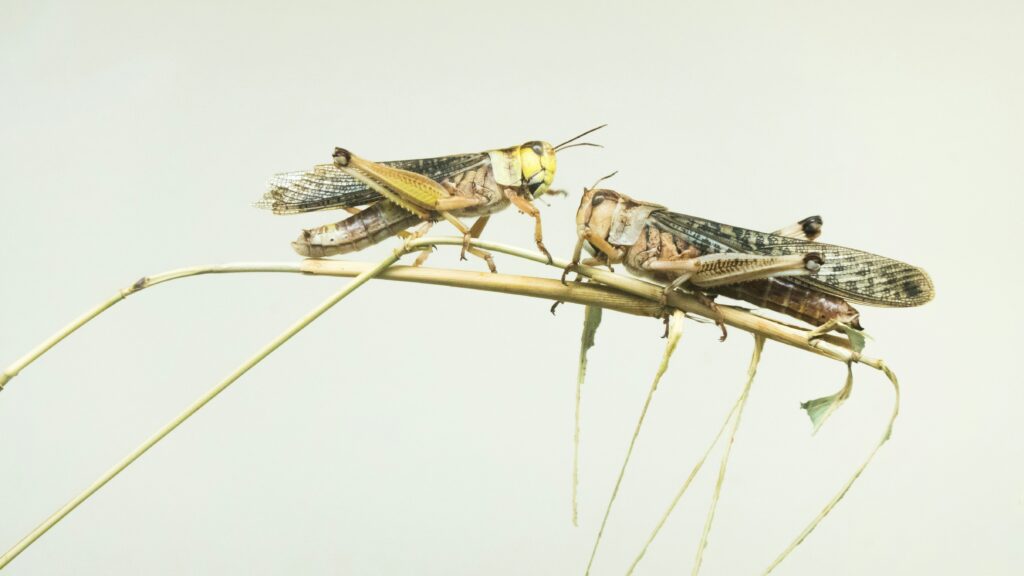
researching producer responses to grasshopper outbreaks in the American West.
Through Yale’s Ucross High Plains Stewardship Initiative, my team and I will be
interviewing producers about their experience with and response to these
outbreaks, then producing a final deliverable analyzing these data. Granted,
it’s something I’m being employed to do—nothing I’ve whipped out at parties
(yet)—but nonetheless, has already expanded my worldview and exercised skills I
know I will employ in my future practice.
Translating Science
If you ask the average environmental lawyer what they most enjoy
about their job, their response will often be “learning something new every
day.” When a client approaches you with an environmental problem, it is
unlikely that you are an expert in that niche problem. That said, it’s expected
that you become AMEAP (as much of an expert as possible)—and on a short
timeline. To do so, the answer is simple: study up.
While I’ve worked in the western United States, I can’t say I
spent considerable time thinking about grasshoppers before working on this
project. In addition to some internet sleuthing, our project partner recommended
some fundamental literature to kickstart the learning process. To start, I read
Jeffrey Lockwood’s Locust,
which illuminated the social science foundation on which modern grasshopper
suppression stands. I filled in the gaps with scientific papers, which
explained the pros and cons of different grasshopper suppression methods,
including how those methods match different aspects of grasshopper physiology
and balance economic and conservation goals. While there’s always more to
learn, establishing a baseline knowledge allows you to be conversant. In law,
we call that “legalese”; in this project, the equivalent would be
“orthopterese.” Knowing the lingo enables you to tug on threads you might not
have caught otherwise. Users of these suppression methods have practical
considerations different from the academic motivations of those studying them.
Examining both sides of the coin allows you to translate their contours and
bridge interests.
Understanding People
Whatever else it may be described as, the law is fundamentally
human. Take the National Environmental Policy Act (NEPA), a law that requires
federal agencies to evaluate the environmental effects of their proposed
actions. While centered on environmental effects, NEPA’s text
requires preparation of an environmental impact statement (EIS) for actions
“significantly affecting the quality of the human environment” (emphasis
added). While there is a global movement to extricate the “environment” from
the “human” (Rights of Nature), environmental law will always involve
understanding values, understanding people’s relationship to place.
That understanding often begins by identifying stakeholders. In
this case, who is affected by grasshopper outbreaks? Who offers solutions to
them? What government actors are involved? The quality of qualitative data
collected ultimately hinges on the pool of individuals interviewed. Looking at
hazard maps, our project partner narrowed the project’s geographic scope to the
areas most affected: eastern Oregon and central/eastern Montana. From there, we
compiled a broad list of organizations and Tribal nations in those regions that
might have affected members and/or citizens.
Identification, however, is only the first part of the interview
process. Each interview lasts only 60-90 minutes—a short time to listen to
concerns, respond thoughtfully, and navigate a list of standardized questions
for each interviewee. Here’s where the “orthopterese” comes in; instead of
spending time discussing, for example, government stakeholder APHIS (the Animal
and Plant Health Inspection Service), we as interviewers must be able to fill
in the blanks, to tactfully select the next best question in-the-moment using
inductive reasoning.
That selection requires teamwork and tailoring, understanding
the different strengths collaborating interviewers bring to the table and
working together to tailor a deliverable to a client’s request. At its core,
interviewing is a skill as simple as it is complex, at its most basic an
exercise in being a human that listens to and works diligently to understand
other humans.
A year ago, I couldn’t have conceived spending a semester with Melanoplus sanguinipes on the mind. Now, I remain sanguine that researching grasshoppers makes me a better (prospective) lawyer.
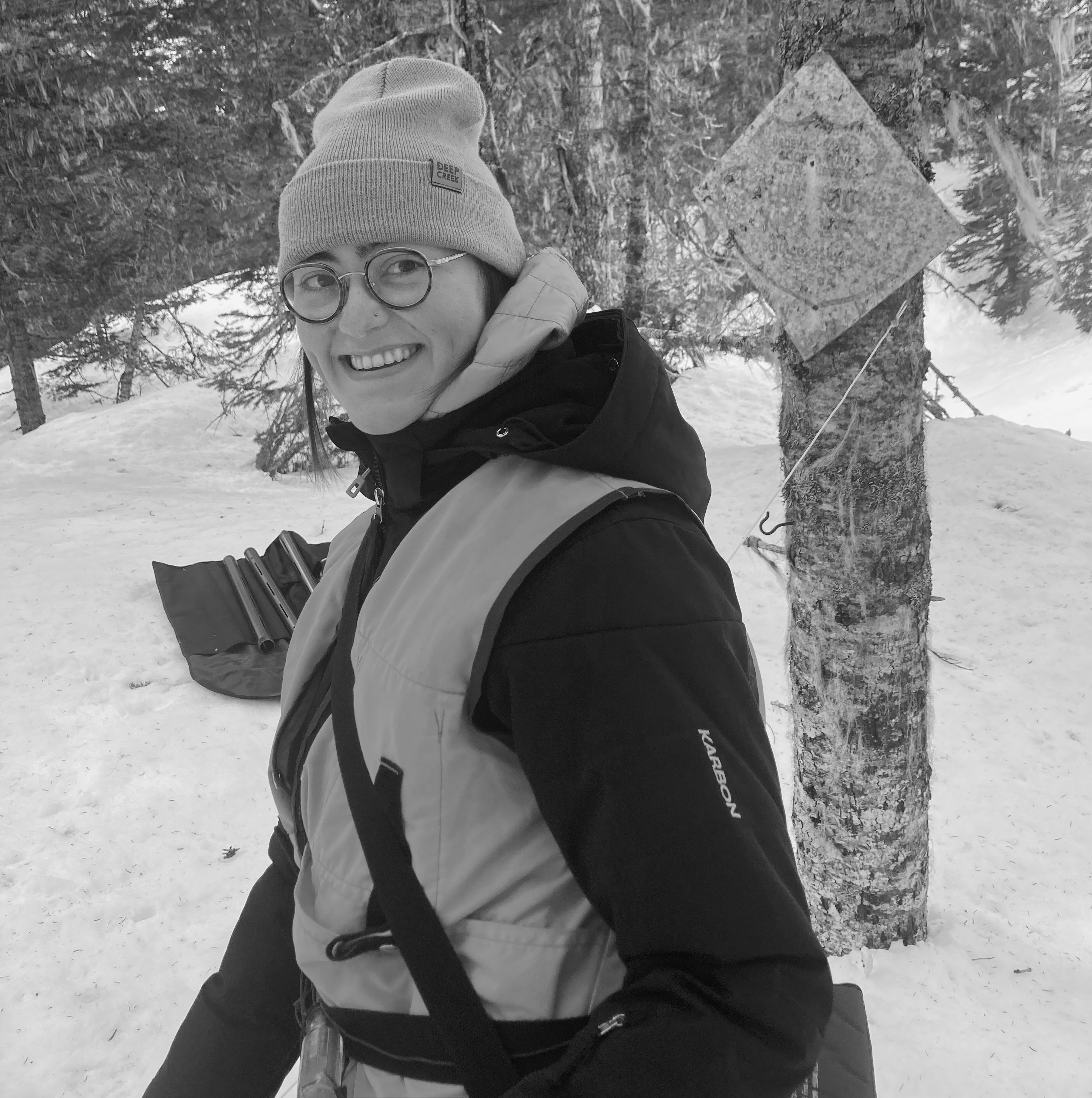
Alexia Zolenski – Research Assistant | Alexia (Lexi) Zolenski is a joint JD/Master of Environmental Management candidate at Yale
School of the Environment and Vermont Law School. While in law school, she interned with the Great Lakes Environmental Law Center in Detroit, Michigan and was a summer associate at the nation’s foremost environmental law firm. Before law school, Lexi worked as a park ranger for the National Park Service at Utah’s Zion National Park and Alaska’s Klondike Gold Rush National Historical Park, where she could be spotted giving enthusiastic interpretive programs, imploring park visitors to “not bust the crust” and “give plants a chance,” or snowshoeing down a steep pitch along the South Klondike Highway on her way to conduct a snow survey. Her interests bridge the sciences and the arts, the local and the global, and include environmental justice,
international environmental law, public lands, and facilitating compassionate conversation between stakeholders—particularly in western landscapes. Lexi received her Bachelor of Science from the University of Notre Dame, double majoring in Biological Sciences and History. She is a connoisseur of coffee and biscuit breakfast sandwiches, prefers sedimentary rock over metamorphic or igneous, and will hike up any hill in her immediate vicinity.